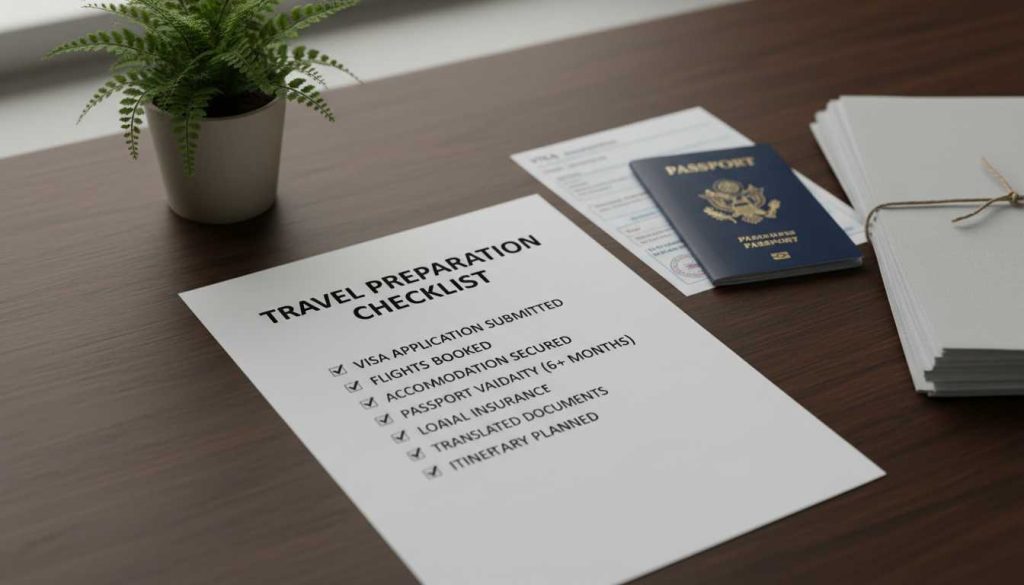
The Submission-Ready Checklist: What You Should Receive From a Provider
If you are ordering a translation for a visa, passport application, court matter, university admission, overseas registration, or another formal process, the real question is not simply “Can this be translated?” It is “Will this arrive in a form I can actually submit with confidence?”
That is where a submission ready certified translation matters.
A submission ready certified translation is not just translated text on a page. It is a complete, usable pack: every relevant page translated, the certification included, the signature and date in place, and the delivery format suited to the authority receiving it. UK guidance for visas and passport-related applications makes clear that non-English or non-Welsh documents must be accompanied by a certified or official translation, and Home Office-facing guidance sets out core details a translation must contain so it can be independently verified. (GOV.UK)
For clients, that means one thing: the provider should not leave you with loose ends. You should not have to chase for a certificate page, ask whether the translation has been signed, or discover at the last minute that the receiving body wanted a PDF and a posted hard copy.
This guide shows exactly what you should receive from a provider before you submit anything.
What “submission ready” really means
A translation becomes submission ready when it passes three tests:
- Completeness: The whole document has been dealt with properly, not just the obvious body text.
- Certification: The translation includes the formal declaration or certification details required for official use.
- Usability: The file arrives in the format you actually need, with no confusion about what to print, attach, upload, or present.
Many clients focus on speed or price first. Those matter. But when a translation is being reviewed by an official body, completeness and format often decide whether the process moves smoothly or turns into another round of requests, delays, and stress.
The four things every provider should deliver
1. Fully translated pages
The first expectation is simple: you should receive all translated pages that are relevant to the original document, not a partial extract dressed up as a finished job. That usually means:
- every page that forms part of the document
- visible text in headers, footers, notes, and margins where relevant
- stamps, seals, labels, and handwritten annotations when legible
- page numbering that makes the sequence easy to follow
- names, dates, places, and reference numbers reproduced carefully
This matters because official reviewers do not assess your document the way a casual reader does. They look for completeness. A missing reverse page, omitted annotation, or unexplained stamp can trigger questions the provider should have helped you avoid.
A good provider also flags issues early. If a page is blurred, cut off, poorly lit, or incomplete, you should be told before the work is finalized, not after you are already close to submission.
2. A certificate page or certification statement
A submission ready certified translation should include a certificate page or a clear certification statement attached to the translation pack. This is the formal part that tells the receiving authority the translation is being presented as a true and accurate rendering of the original document.
Depending on the provider’s workflow and the authority involved, the certification may appear:
- on a separate certificate page
- at the end of the translated document
- as a combined final page attached to the translation pack
Whatever format is used, it should be obvious, professional, and complete. If you receive translated pages with no certification statement at all, that is not a finished submission pack. It is an incomplete delivery.
3. A signature, date, and provider details
This is where many clients get caught out. They assume “certified” is a vague label. It is not. For many UK-facing official uses, the translation needs identifiable details that allow the translation to be verified.
A strong submission ready certified translation should include:
- confirmation that the translation is accurate
- the date of translation
- the translator’s or authorised company representative’s name
- a signature where required for the use case
- contact details for the translator or translation company
Home Office guidance repeatedly points to these verification elements, and GOV.UK also gives public guidance on what a certified translation should confirm in writing. (GOV.UK)
In practical terms, that means you should never be left wondering:
- Who certified this?
- When was it certified?
- Can the receiving body identify the provider?
- Is there enough information here for verification?
If those answers are unclear, the pack is not submission ready.
4. The right delivery format
Delivery format is often treated as an afterthought. It should not be. Before you order, the provider should understand whether you need:
- a digital PDF for online upload
- a printed hard copy
- both email delivery and posted originals
- a signed and stamped paper pack
- a notarised or apostilled version for overseas use
This is especially important because different submission routes work differently. Some applications are uploaded digitally. Others still rely on originals, posted paperwork, or paper forms. ATC guidance notes that digital certification is available for accredited members, but official processes can still require original documents or paper-based handling depending on the authority and route. (The Association of Translation Companies)
A provider that truly delivers submission ready certified translation should tell you the expected format options upfront, not leave you to guess.
The submission-ready checklist
Before you submit your translation, make sure you have received all of the following:
Document completeness
- All pages of the source document have been translated where required
- The page order is clear and consistent
- Names, dates, places, reference numbers, and document numbers are visible and checked
- Stamps, seals, handwritten notes, and official markings are addressed where relevant
- Missing or illegible areas are clearly marked and explained rather than silently omitted
Certification essentials
- A certificate page or certification statement is included
- The translation confirms it is true and accurate
- The certification includes a date
- The provider’s name is present
- A signature or authorised sign-off is included where needed
- Contact details are present for verification
Delivery essentials
- You have the final PDF version
- You know whether you also need a hard copy
- The file is named clearly enough to identify the document
- You know whether the receiving body requires the original source document alongside the translation
- You know whether notarisation or apostille is needed instead of standard certification
Quality essentials
- Spelling of personal names matches the source document unless an instructed standardisation is needed
- Dates and numbers are checked carefully
- The formatting is easy to follow
- There are no unexplained blanks, placeholders, or inconsistent terminology
- You understand exactly what has been delivered and what level of certification it includes
The most common gaps that cause follow-up requests
A provider may say a translation is “official” or “accepted,” but that does not always mean the pack is complete. The most common weak points are predictable.
Missing translated pages
This happens when only the obvious front page is translated, while reverse pages, annexes, stamps, or handwritten notes are ignored.
No certificate attached
You receive the translated text but no certification statement, no cover page, and nothing that makes the pack feel formally complete.
No signature or date
The translation may look polished, but it is missing the details many authorities expect to see.
Wrong format
You needed a signed PDF and a hard copy by post, but only received a plain electronic file.
No advice on escalation
Standard certification may be enough for one authority but not another. If notarisation or apostille is likely, a good provider should tell you before you pay for the wrong level of service.
A simple way to judge whether a provider understands official submissions
A reliable provider does not just answer “yes, we do certified translations.” They should be able to answer these questions clearly:
What exactly will I receive?
You want a direct answer such as:
- translated pages
- certificate page
- signed and dated certification
- PDF by email
- hard copy by post if needed
Will all visible content be dealt with?
That includes stamps, seals, notes, marginal text, and handwritten additions where legible.
Who signs the certification?
You should know whether it is the translator, an authorised company representative, or another approved signatory.
Can you provide the format I need for my authority?
A provider should ask where the translation is going and what format is required.
Do I need certified, notarised, or apostilled translation?
If the document is for use abroad, this question matters. Standard certification is not always the last step.
What happens if my scan is unclear?
A careful provider asks for a better image before finalising the pack.
Can you turn this around without compromising the submission pack?
Urgent delivery is useful, but a rushed incomplete pack is not.
Certified, notarised, or apostilled: knowing the difference matters
Certified translation
This is the standard requirement for many UK submissions, including visa, passport, academic, and civil document use cases. The translation is accompanied by a certification statement and verification details.
Notarised translation
This is usually needed when a third party specifically asks for a notary’s involvement or when documents are going overseas for a more formal process.
Apostilled or legalised translation
This is relevant when a document is being prepared for use in another country and further legal authentication is required. UK professional guidance from CIOL and ATC is helpful here because it distinguishes certified translation from higher levels of formalisation and gives a clearer baseline for what proper certification looks like. (CIOL)
A good provider should not oversell a more expensive option you do not need. Equally, they should not undersell standard certification when your receiving authority actually requires something more formal.
The best providers think like submission managers, not just translators
This is the part many comparison pages miss. The strongest providers are not just language suppliers. They are process partners. They look at your order and think:
- Is the scan complete?
- Is the purpose clear?
- Does the client need digital, paper, or both?
- Is the certification wording suitable for the use case?
- Could the authority ask for notarisation later?
- Has anything been missed that would create avoidable follow-up?
That is the difference between a basic translation service and a provider that genuinely delivers submission ready certified translation.
What you should expect from TS24
When clients order official document translation, they are usually not buying “words on a page.” They are buying confidence that the document pack will stand up to formal review.
TS24 positions its certified translation services around official use cases such as Home Office, courts, government bodies, academic institutions, and passport-related applications. Across its main service and knowledge pages, TS24 states that it is an ATC-accredited provider, that its translators are registered with bodies such as CIOL and ITI, and that it supports certified, notarised, and related official document workflows. TS24 also states that it works in 200+ languages, has over a decade of experience, processes 15+ million words annually, has completed 100,000+ projects, and is trusted by thousands of clients. (Translation Services 24)
That matters because the strongest trust signals for this kind of service are not vague slogans. They are:
- clear accreditation
- named professional bodies
- identifiable translators or authorised signatories
- published service pathways for certified and notarised work
- visible reviews and client history
- a defined translation and quality assurance process
One client quote featured on the TS24 site captures the practical value well: “TS24 is always our go to agency for language translations and interpreting. We find them very professional, hands on and flexible with the way they offer their services.” (Translation Services 24)
If you need your translation for a visa, civil record, legal matter, or official application, that kind of operational reliability matters just as much as language accuracy.
Final check before you submit
Before you upload, print, post, or hand over your translated document, do this final review:
- Compare the number of translated pages to the source document
- Confirm the certificate page is present
- Check for a date on the certification
- Check for the signatory name and contact details
- Confirm whether the receiving authority wants a PDF, hard copy, or both
- Make sure your original source document is also ready where required
- Re-read names, dates, reference numbers, and document numbers one last time
If anything is missing, pause and fix it before submission. That one step can save you a delay, a rejection, or an urgent reorder.
The bottom line
A submission ready certified translation should leave you with nothing important to chase. You should receive translated pages you can actually use, a certificate page or certification statement that clearly completes the pack, the signature and date needed for formal review, and a delivery format matched to the authority you are dealing with. That is the standard clients should expect.
If you are ordering for an official purpose, do not settle for “translated.” Ask for “submission ready.” Send your document to TS24, explain where it is being submitted, and request the complete pack from the outset. That is the simplest way to reduce delays and move forward with confidence.
FAQs
What is a submission ready certified translation?
A submission ready certified translation is a complete official-use translation pack. It typically includes the full translated document, a certificate page or certification statement, the relevant sign-off details such as signature and date, and the delivery format needed for submission.
Does a submission ready certified translation include all translated pages?
It should. A proper pack should cover all relevant translated pages, not only the main front page. That often includes visible official markings, stamps, seals, and legible handwritten notes where they matter to the document’s meaning or official status.
Do I need a certificate page for a certified translation?
In many official contexts, yes. The certification may be presented as a separate certificate page or as a formal statement attached to the translation. What matters is that the pack clearly shows the translation has been certified for official use.
Why are signature and date important on a certified translation?
For many official uses, the signature and date help show when the translation was certified and who is responsible for it. These details support verification and reduce the risk of questions from the receiving authority. (GOV.UK)
What delivery format should I ask for from a provider?
Ask for the format that matches your submission route: PDF, hard copy, or both. For some applications, a digital file is enough. For others, you may need a printed, signed, and stamped version or additional formalisation such as notarisation.
Is certified translation enough, or do I need notarisation?
That depends on the authority receiving the document. Many UK processes accept certified translation, but some overseas or higher-formality processes may require notarisation or apostille. If the provider cannot explain the difference clearly, ask before you place the order.